

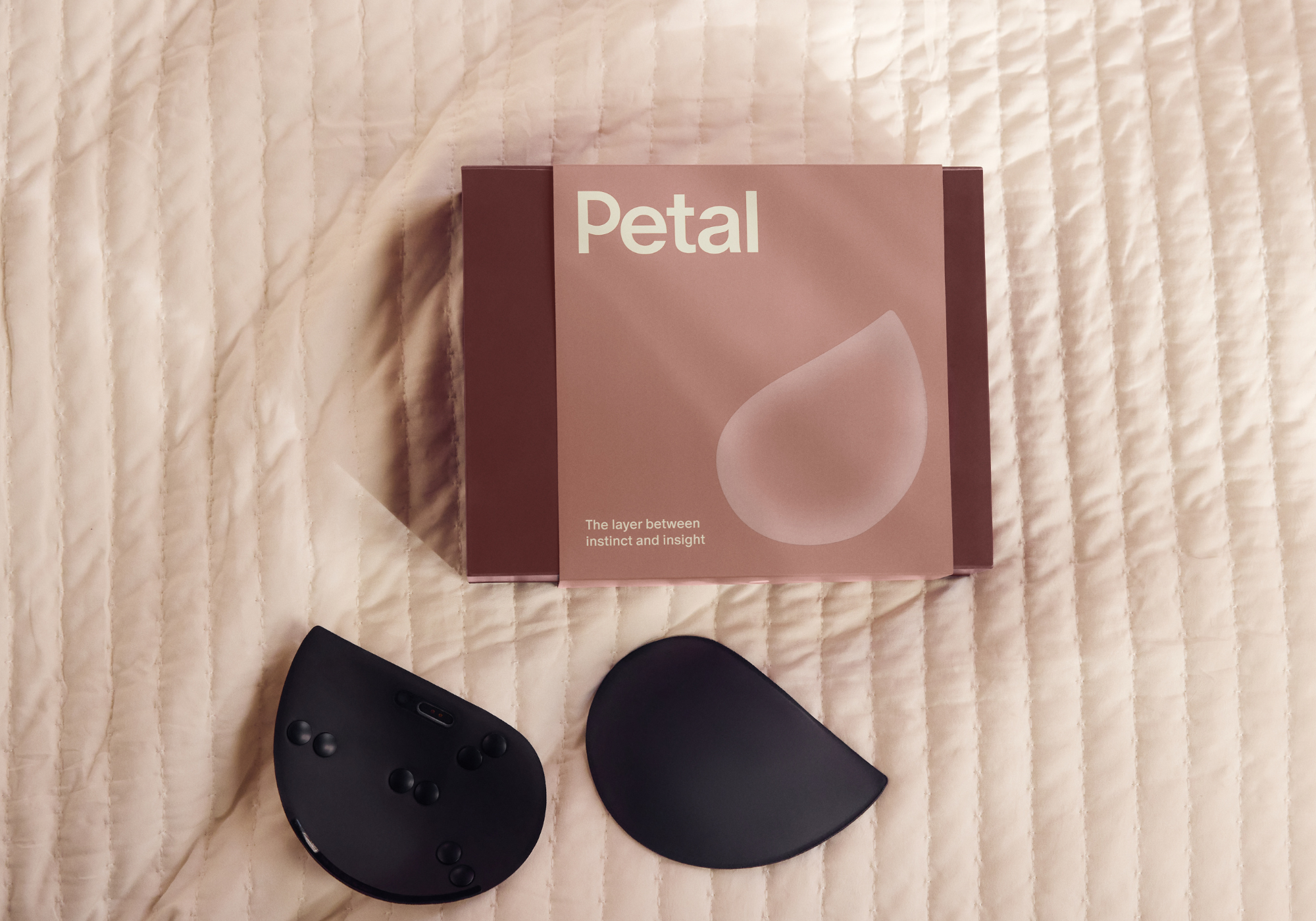
We’ve all been there: checking our wrist after a workout only to see a heart rate reading that feels… well, a little suspicious. Whether it’s a "ghost" spike while you’re just walking or a lag during high-intensity intervals, wrist-based wearables have a built-in limitation: they’re trying to listen to your heart from the very end of your arm.
If you’re serious about monitoring your cardiovascular health and hormonal rhythms, it’s time to talk about placement. Specifically, why moving the sensor from your wrist to your chest (via a bra insert) is a game-changer for health data accuracy.
The Tech: Light vs. Logic
Most wrist wearables use Photoplethysmography (PPG). It’s a fancy word for using green light to "see" blood flow through your skin. While it's great for counting steps, it has some major blind spots:
-
The Noise Problem: Every time you move your wrist, you create motion artifacts that confuse the sensor.
-
The Bias Problem: Because PPG relies on light, it can be less accurate for people with darker skin tones or even those with tattoos.
Petal takes a different approach by using Bio-impedance Analysis (BIA) sensors and ECG/EKC measurements. Similar to the technology used in high-end smart scales, BIA measures the body’s natural electrical resistance. In addition Petal sensors also measure the electrical signals that a beating heart creates. Thus, instead of trying to "see" your blood flow at the wrist or finger, it captures clear, direct signals from the source.
Location: Why the Thorax Wins
In the world of data, "signal-to-noise ratio" is everything. By sitting inside your bra, the Petal sensor is positioned directly over the thorax and heart.
-
Wrist or finger: The signal has to travel all the way to your extremities, and can be affected by noise generated by frequent arm or hand movement.
-
Chest: The sensor stays snug and stable against your body. This allows for medical-grade monitoring of Resting Heart Rate (RHR) and Heart Rate Variability (HRV) without the interference and motion artifacts that plague watches and rings.
Built for Women, Not "Adapted" for Women
Let’s be honest: most wearables were designed for men first, with period tracking features added as a software update years later. These devices usually rely on basal body temperature to track fertility and cycle changes through nightly temperature fluctuations. This is notoriously finicky: one bad night of sleep or a glass of wine can throw your whole chart off.
The Petal Difference: Because it sits against breast tissue, Petal can monitor natural shifts in breast ductal tissue and water content. These are direct biological indicators of your cycle phases, providing a much more nuanced picture of your health than a simple temperature reading ever could.
|
Feature |
Petal Bra Insert |
Standard Wrist or Finger Wearable |
|
Sensor Type |
Medical-grade BIA (Electrical) |
PPG (Light-based) |
|
Accuracy |
High (Direct heart signals) |
Variable (Prone to motion "noise") |
|
Cycle Tracking |
Ductal tissue & fluid shifts |
Basal temperature (Easily skewed) |
|
Battery Life |
Up to 18 Days |
1–5 Days (Typical) |
|
Discretion |
Completely invisible |
Visible "tech" look |
The Verdict
If you want a device to remind you to stand up or show you your text messages, a smartwatch is great. But if you want medical-grade data that understands the unique nuances of women’s biology, from heart health to cycle shifts, the science points toward the chest.
Petal doesn’t just "add" women’s features; it’s built from the ground up to listen to what your heart (and your body) is actually saying.
Ready to get closer to your data?
Reserve your Petal today and see what happens when your wearable finally speaks your body's language.