

For centuries, women have navigated a complex relationship with their bodies and a reliance on intuition to interpret the subtle and sometimes shouting signals our physiology sends us. Nowhere is this more evident than in the cyclical changes of our breast health. We often view our breasts as static, but the reality is they are dynamic, living tissues that fluctuate with our hormones.
If you’ve ever felt tenderness before your period, noticed a new lumpiness that vanishes a week later, or felt your heart race during certain times of the month, you aren't imagining things. You are experiencing the powerful, orchestrated shifts of your menstrual cycle. It’s time to move from intuition to insight, using the data your body has always held to understand the true story of your breast health.
Breast tenderness is common
Let’s start with the most common complaint: breast pain, or mastalgia. If your breasts feel swollen, heavy, or tender in the days leading up to your period, you are far from alone. In fact, about 70% of women experience breast soreness at some point in their lives (source). For some, it can last for several days before menstruation begins.
This cyclical tenderness is largely driven by hormonal fluctuations. As your body prepares for a potential pregnancy during the luteal phase (the second half of your cycle), progesterone levels rise, leading to fluid retention and increased blood flow to the breast tissue. This causes the swelling and sensitivity that can make even putting on a bra feel like torture. (See also).
While this pain is often dismissed as just "part of being a woman," recent research offers hope for management. For example, a 2024 study found that a combination of Vitamin E and evening primrose oil helped reduce cycle-related breast pain.
Understanding that this pain is a physiological response—not a random ailment—empowers you to track it. By monitoring these patterns, you can differentiate between what is "normal" for your cycle and what might require medical attention.
"Cobblestones" and texture: what does normal feel like?
Another source of anxiety for many women is the texture of their breast tissue. We are often taught to look for lumps, but healthy breast tissue itself is rarely perfectly smooth. It often feels nodular or ropey, like a bag of frozen peas or cobblestones.
This texture is completely normal, but that lumpiness can change with your hormones. Just as your uterus thickens and sheds, your breast tissue undergoes its own cycle of cell growth and fluid accumulation. This can make your breasts feel denser or lumpier at different times of the month.
This variability underscores why timing is everything when it comes to self-exams. The gold standard time to check yourself is 3 to 5 days after your period starts. During this window, your natural hormonal swelling is at its lowest, and your tissue is likely at its softest and least nodular. Checking at the same time every cycle allows you to learn your personal baseline, your "normal." When you know what your "cobblestones" usually feel like, you can spot a true outlier with confidence, rather than panic.
Height and breast density: a surprising link
Beyond the monthly cycle, there are structural factors that influence your breast health profile. One of the more surprising connections found in recent research is the link between height and breast density. If you are a woman over 5'6”, there is a correlation you should know about: research shows that taller women often have denser breast tissue.
Breast density refers to the amount of fibrous and glandular tissue compared to fatty tissue in your breasts. It’s not about size; it’s about composition. Why does this matter? Dense tissue appears white on a mammogram, just like potential tumors, which can make it harder to spot changes or abnormalities. Furthermore, some studies suggest that high breast density is an independent risk factor for breast cancer. A mammogram can help you identify your breast density and allow your healthcare practitioner to decide if additional screening is helpful.
Height is just one piece of the puzzle. Other factors such as obesity, age, genetics, and more may have stronger associations with breast cancer risk, and understanding your density can help you and your doctor decide if you need supplemental screening, like an ultrasound or MRI, in addition to your regular mammogram.
Hormones, your heart, and your cycle
Your breasts are not the only organ affected by your hormones; your heart is listening, too. We often compartmentalize our health—heart health here, reproductive health there—but your cycle is a whole-body event. Estrogen, a dominant hormone in the first half of your cycle, is cardioprotective. It helps regulate your heart rate and keeps blood pressure in check.
So, when estrogen levels drop—whether during the late luteal phase of your cycle or more permanently during perimenopause and menopause—your heart loses that protective buffer. As your body adjusts to these lower levels, your heart may beat a little faster. In fact, up to 42% of perimenopausal women and 54% of postmenopausal women will experience heart palpitations (source).
If you’ve ever noticed your heart racing for no apparent reason, before you panic, check where you are in your cycle. It might be your body’s natural response to a hormonal shift. Tracking your cycle gives you the context to understand these palpitations. If the heart rate shift seems abnormal for your body or you have any additional concerns, then please mention it to a healthcare professional.
The power of real-time monitoring
For too long, women have had to rely on guesswork, calendars, or intuition to track these complex changes. We’ve used basal body temperature thermometers or period-tracking apps that rely on averages rather than our unique biology. But technology is finally catching up to female physiology.
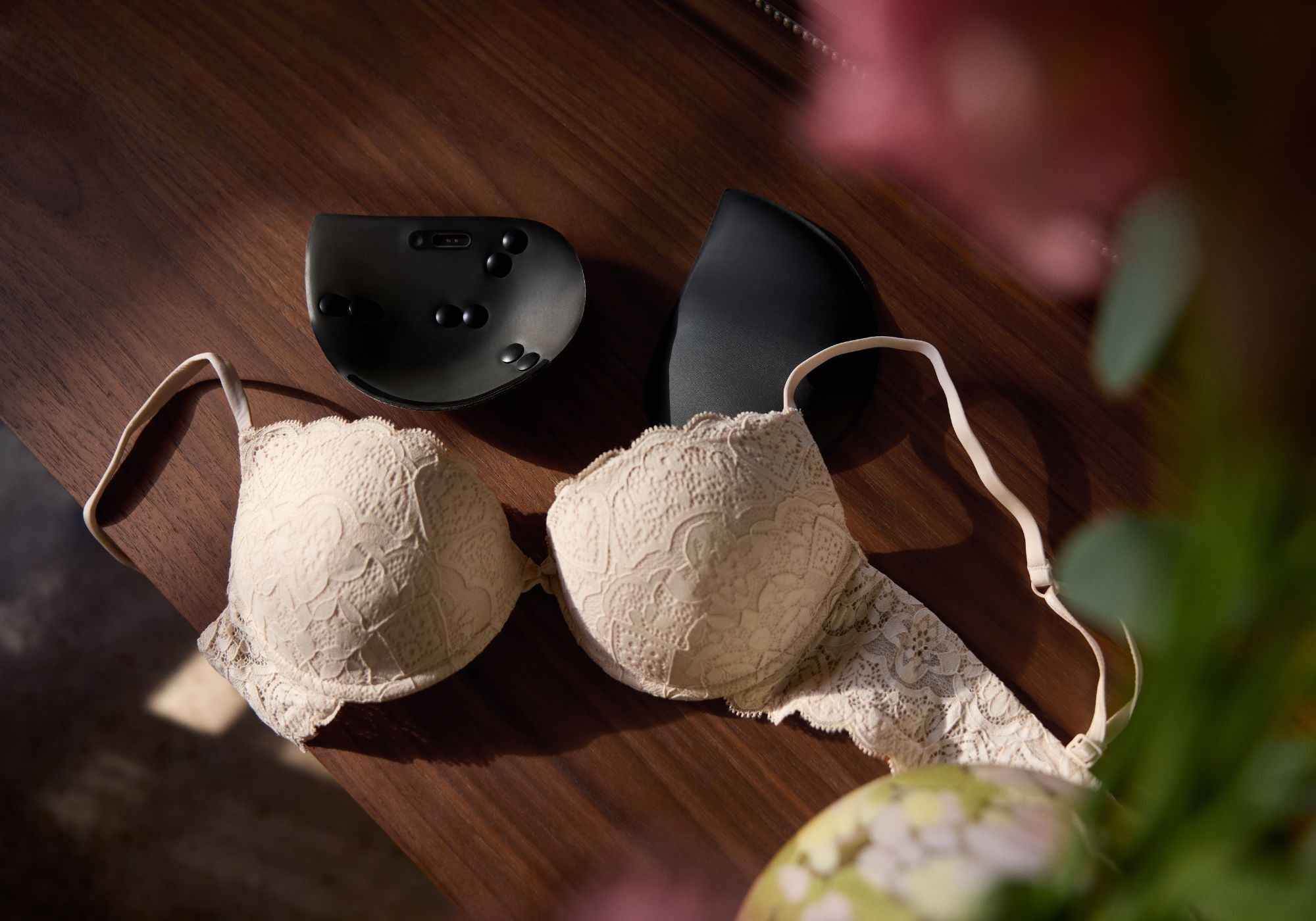
Your cycle is one of the best tools you have to explore whole-body health, and measuring it at the source changes everything. Unlike wrist- or finger-based wearables that estimate cycle phases from skin temperature on your extremities, new technology like Petal uses the breast itself as a biomarker.
Petal is a discreet, smart bra insert that tracks changes in your breast tissue and water content in real-time. By using clinical-grade Bio-Impedance Analysis (BIA) sensors, it measures the hydration and density shifts inside the breast tissue (the very changes that cause tenderness and texture variation). This means you can "see" the soreness coming.
From “hysteria” to health literacy
Historically, women’s pain and medical symptoms have often been dismissed. From the ancient "wandering womb" theories to the 19th-century diagnosis of "hysteria" for everything from chronic pain to anxiety, women have been told that their physical realities are "all in their head."
Even today, conditions like endometriosis, which affects 1 in 10 women, take an average of 5 to 10 years to diagnose because symptoms are normalized, ignored, or misunderstood. When we track our data, we flip the script. We move from subjective feedback (which, to be clear, your doctor should also be listening to) to objective, data-driven evidence.
By monitoring your breast health in tandem with your cycle, you are doing more than just predicting your period: you are building a comprehensive picture of your metabolic and hormonal health. Whether it’s managing the discomfort of mastalgia, timing your self-exams for accuracy, or understanding the hormonal triggers of your heart rate, your body has been telling you this story for years. Now, you finally have the language to read it.
Trust what you’ve always known. Your body is speaking. Are you ready to listen?